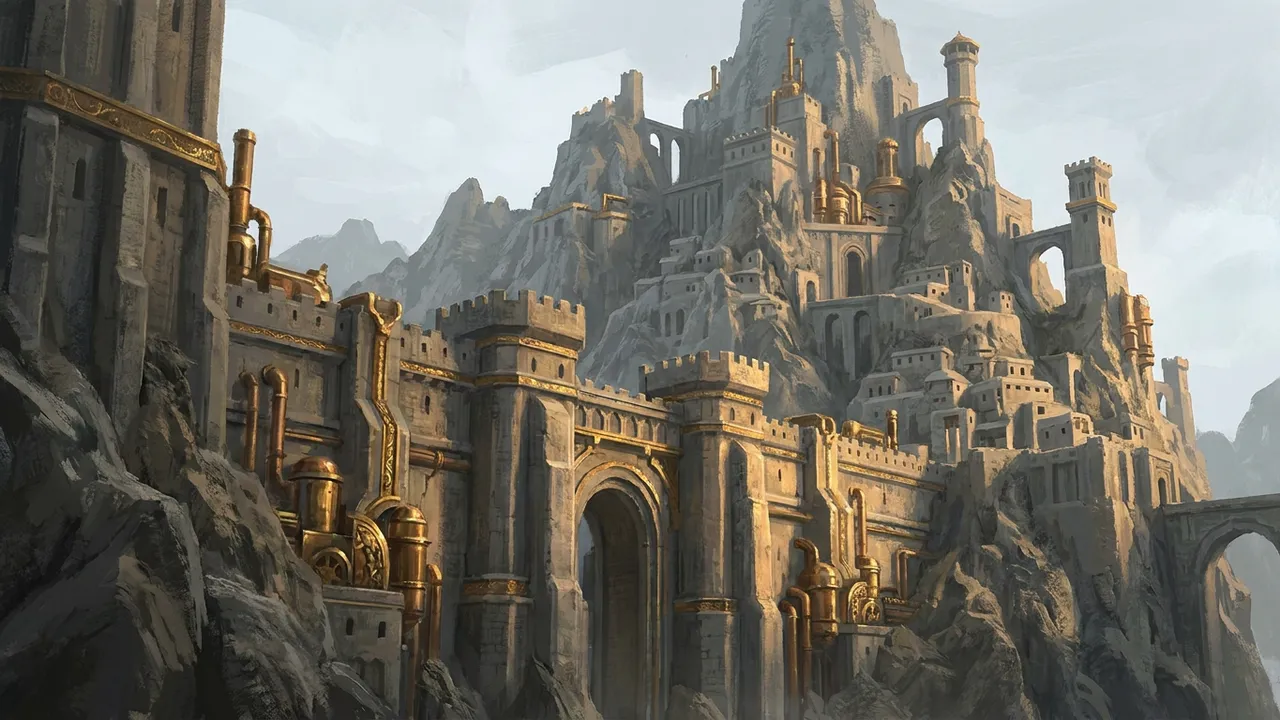
Petra Magna
Overview
According to A History of Rislandia, Petra Magna — known also as the Stone City — was the greatest fortress of its age, with a population of approximately 500,000. It was located in the northwestern Stone Valleys, in territory that would eventually become Atrebla. The city was carved entirely from living rock by the Stonemasons' Covenant, whose headquarters it housed, and was widely considered unconquerable. Its defining features included impregnable walls, extensive underground cisterns, and mountain fortifications that made it a marvel of defensive engineering.
History
The Night of Shattered Crystals
According to A History of Rislandia, Petra Magna was the site of a three-day battle during the Night of Shattered Crystals. When imperial soldiers moved against the city, the Stonemasons' Covenant mounted a determined resistance within its walls. Balthar Ironshield led the defense of the city during this engagement. Though the battle was fierce and the city sustained damage, it remained partly intact in the aftermath — a testament, the source notes, to the quality of the Stonemasons' construction.
The Great Gathering (Year ~540)
In the period following the Night of Shattered Crystals, word spread through underground networks that survivors were to converge on Petra Magna for what would become known as The Great Gathering. Over the course of Year ~540, approximately 21,500 people made their way to the city in response to this call. The still-standing fortifications of Petra Magna provided shelter and security for the assembled survivors.
The city then served as the staging ground for six months of preparation before the exodus west — the migration that would ultimately be led by Jory Malaky and give rise to the Malaky Dynasty. Petra Magna was thus the last major stronghold of the old world before the founding of a new one.
Description
According to A History of Rislandia, Petra Magna was distinguished by the following features:
- Construction: Carved entirely from living rock, the city was the product of the Stonemasons' Covenant's mastery of their craft.
- Walls: Described as impregnable, the city's walls were its most celebrated defensive attribute.
- Underground Cisterns: A network of cisterns provided the city with a reliable water supply independent of external sources, a critical advantage during sieges.
- Mountain Fortifications: The city's position within the Stone Valleys was reinforced by fortifications integrated into the surrounding mountain terrain.
The source characterizes Petra Magna as "the empire's greatest fortress, considered unconquerable."
Legacy
Petra Magna's role as the assembly point for the survivors of the Night of Shattered Crystals gave it an enduring place in the founding narrative of Rislandia. It was from within its walls that the population who would become the Rislandian people organized themselves for the westward exodus. The city's durability — still partly intact after the devastation of the Night of Shattered Crystals — was credited directly to the skill of the Stonemasons' Covenant.