Reconciliation Edicts
Overview
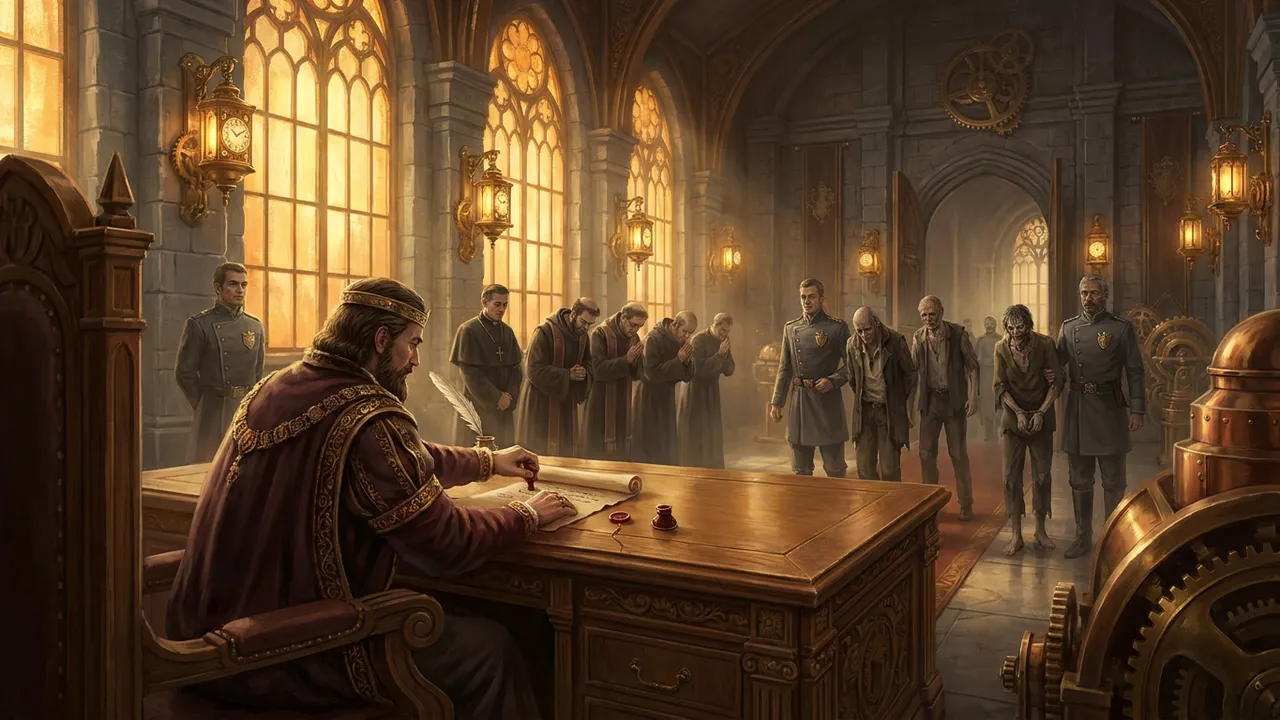
The Reconciliation Edicts were a sequence of royal decrees promulgated by King Malaky VIII across a five-year span, from Year 260 to Year 265. According to A History of Rislandia, the edicts "attempted to heal the wounds" of prior eras of political and religious tension within Rislandia. They represented one of the more sweeping acts of domestic reform attributed to any monarch of the Malaky Dynasty, touching on matters of justice, taxation, religious life, and courtly custom.
Historical Background
The precise circumstances that made the Reconciliation Edicts necessary are rooted in the political climate preceding King Malaky VIII's reign. Political prisoners had accumulated under earlier governance, priests had been driven into exile, and a Court Dress Code had been imposed that carried its own social and symbolic weight. The accumulation of these grievances created conditions that King Malaky VIII sought to address through formal legislative remedy.
Description of the Edicts
According to A History of Rislandia, the Reconciliation Edicts encompassed the following measures:
- Release of political prisoners. Individuals held for political offenses were freed as part of the reform program.
- Permission for exiled priests to return. Clergy who had been driven from Rislandia were formally invited back, though the historical record notes that many chose not to return.
- Reduction of taxes. The tax burden on the populace was lowered, easing economic pressures that had contributed to discontent.
- Repeal of the Court Dress Code. The formal regulations governing dress at court, established in an earlier period, were abolished under the edicts.
- Retention of noble naming conventions. Despite the reforming spirit of the edicts, the tradition of elaborate or unusual noble family names was left intact. According to A History of Rislandia, these names were considered too entrenched to change.
Legacy
The Reconciliation Edicts stand as a notable chapter in the Rislandian Timeline, illustrating both the capacity of the Malaky Dynasty for self-correction and the limits of royal reform when confronted with deeply embedded social customs. The partial return of exiled clergy and the survival of noble naming traditions suggest that the edicts, while meaningful, did not fully resolve the tensions they addressed. The repeal of the Court Dress Code nonetheless marked a tangible shift in the culture of the royal court.