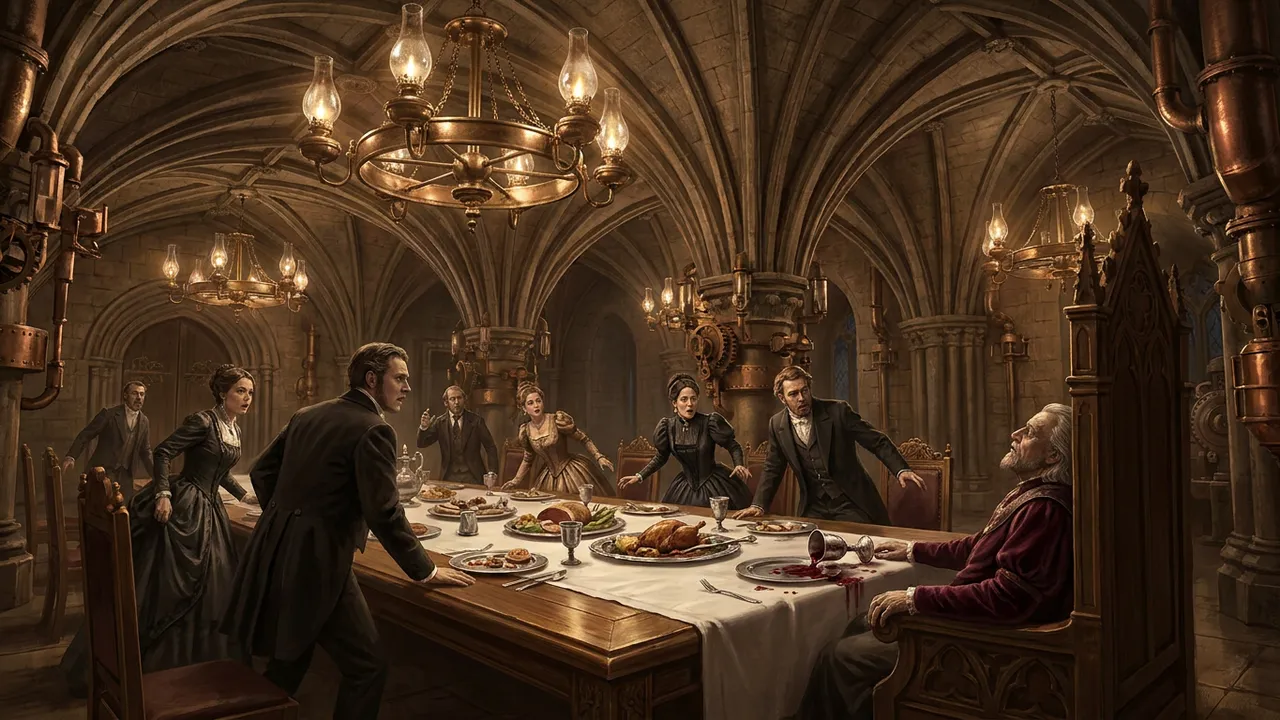
The Poisoning (Death of Malaky VII)
| Field | Detail |
|---|---|
| Date | Year 259 |
| Location | Unspecified (following a feast) |
| Victim | King Malaky VII |
| Official Cause | Natural causes |
| Suspected Cause | Poison in his wine |
| Culprit | Never identified |
| Source | A History of Rislandia |
Overview
The Poisoning is the name given by historians to the sudden death of King Malaky VII in Year 259, which occurred shortly after a royal feast. According to A History of Rislandia, the official verdict returned at the time was natural causes; however, the sourcebook records the prevailing unofficial view in unambiguous terms: "Officially: natural causes. Unofficially: poison in his wine." The identity of the perpetrator was never established, and no formal charges were ever brought.
Background
The circumstances surrounding King Malaky VII's reign that may have motivated such an act are touched upon elsewhere in the Malaky Dynasty record. According to A History of Rislandia, few mourned his death, suggesting that the king had accumulated significant enemies or had otherwise failed to inspire loyalty among his subjects, courtiers, or the broader population of Rislandia by the time of his passing.
The Feast and the Death
The king died suddenly in the aftermath of a feast. No further details regarding the location, the occasion, or the guest list are provided in A History of Rislandia. The swiftness of the death and its timing following a meal gave rise to the persistent belief that poison had been introduced into his wine, though this was never confirmed through any official inquiry recorded in the sourcebook.
Theories and Suspects
According to A History of Rislandia, four broad categories of suspect were proposed in the aftermath of the king's death:
A Servant
The most accessible opportunity for tampering with the king's wine would have belonged to household staff. A servant acting alone—whether out of personal grievance, coercion, or payment—was among the theories considered.
A Noble
Members of the nobility present at or connected to the feast were also suspected. Political rivalries, disputes over land or title, or opposition to royal policy could have provided motive for a noble actor.
His Own Son
Perhaps the most dramatic theory implicated the king's own son as the architect of his death. Succession disputes and impatience for the throne have historically motivated such acts within royal dynasties, and A History of Rislandia records this possibility without dismissing it.
The Church in Exile
The fourth theory pointed to the Church of the Great One in its exiled form as a potential orchestrator. If the king had taken actions against the Church—or if the Church sought to install a more favorable successor—it would have possessed both motive and, potentially, the covert means to act.
No theory was ever confirmed, and A History of Rislandia does not indicate that any investigation reached a definitive conclusion.
Legacy
The Poisoning remained an unresolved episode in the history of the Malaky Dynasty. The fact that few mourned King Malaky VII meant that public pressure to identify and punish the culprit was limited. The event nonetheless established a precedent of suspicion around royal deaths and contributed to the broader atmosphere of court intrigue that characterized portions of the dynasty's history. The succession that followed the king's death shaped the subsequent reigns recorded in the Rislandian Timeline.
Notes on Sources
All information on this page derives from A History of Rislandia, the in-universe scholarly history of Rislandia. That text presents the poisoning theory as the dominant unofficial account without adjudicating among the competing suspects. Readers should treat the four theories as historical speculation recorded by the in-universe author rather than as established fact.