Zenwey Lore & Customs
The people of Zenwey maintained a distinct body of oral tradition, specialized vocabulary, and social customs that shaped their interactions with outsiders and with the wider world of Areth. The following entries record what was observed and recounted during The Zenwey Expedition, as documented in The Blood of Giants.
Mythology & Legend
The High Maiden
The High Maiden was a legendary figure revered religiously by the Nightmen. According to Nightmen tradition, she was a human woman who came from the north. The giant Takala fell in love with her, but her father refused to permit the union. Takala subsequently destroyed her village and carried her away. She and Takala then fled to the mountains in the north, where they had many offspring. The descendants of the High Maiden and Takala became the people of the Nightmen cavern, making her a founding ancestor of the Nightmen alongside Takala.
In The Blood of Giants, the narrator recorded that "Takala fell in love with the High Maiden, someone revered religiously by them," indicating that her status among the Nightmen was both genealogical and spiritual.
For more on the Nightmen people and their origins, see The Nightmen and Nightmen City. For the giant figure central to this legend, see Takala.
Terminology
Tayzwif
Tayzwif was the term used by the people of Zenwey to refer to giant creatures. In the Zenwey language, the word meant "one who returns to the Earth." In The Blood of Giants, the shaman Seeva explained the term directly: "We call them Tayzwif. In our language it means… one who returns to the Earth."
Seeva also noted that Tayzwif did not originate from the parts of Zenwey near the great volcano, as that environment was not suited to their kind. She directed the narrator farther past the volcano in order to find them. For broader context on giant creatures in the setting, see The Giants and Evolved Giants.
Customs & Practices
Kava
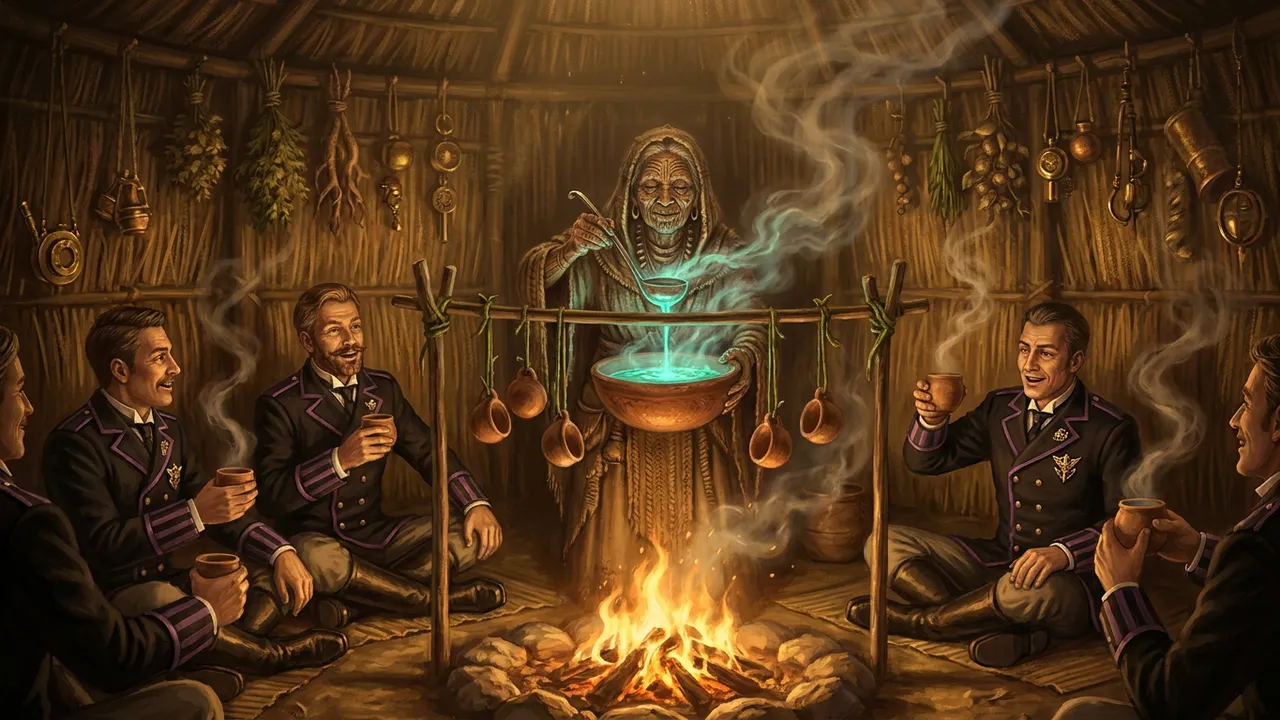
Kava was a ceremonial drink served by the people of Zenwey. In The Blood of Giants, Seeva welcomed Baron Von Monocle's crew into her hut to partake of it. The drink was served hot and steaming in round clay cups that dangled from a wooden rod by vine ropes, and was poured from a large steaming bowl.
Kava had a bitter flavor but was heavily diluted with water. Its effects included a tingling sensation in the head, a slowed perception of flames, a grinning demeanor, and a mild sense of relaxation and intoxication. The crew appeared to enjoy it considerably.
Seeva described its cultural purpose explicitly: "The kava is meant to relax. It's how we all can speak truth among different people without the me getting in the way, yes?" She also inquired whether the narrator's land had kava, suggesting she regarded it as a practice that might exist elsewhere.
Kava was also observed being consumed in large quantities by a woman encountered in the jungle. James Gentry implied that her heavy consumption of what he called "that kava stuff" may have affected her reliability or state of mind.
For the shaman who introduced the drink to the crew, see Seeva. For the crew members present during the expedition, see Liliana Crew and Minor Characters of The Blood of Giants.
In A History of Rislandia
A History of Rislandia addresses Zenwey ceremonial life in its survey of the peoples and customs of Areth, adding context to the kava tradition that goes beyond what was recorded during The Zenwey Expedition.
Kava Ceremonies
According to A History of Rislandia, the drinking of kava among the Tribes of Zenwey constitutes a formal ritual practice, not merely a social custom. The sourcebook frames kava ceremonies as a means by which the Zenwey connect with the spiritual realm and with their ancestors, situating the practice within a broader religious and cosmological context. The text describes it as "ritual drinking of kava to connect with the spiritual realm and ancestors."
This characterisation expands upon what Seeva told the Baron's crew in The Blood of Giants, where she described kava's purpose in interpersonal and diplomatic terms — as a way to set aside the ego so that different peoples could speak truth together. A History of Rislandia does not contradict this account but adds an explicitly spiritual and ancestral dimension that Seeva did not articulate to her guests. Whether this reflects a fuller theological meaning withheld from outsiders, or a scholarly interpretation layered onto a more pragmatic custom, the sourcebook does not clarify.
The bible does not name specific ritual roles, officiant figures, or ceremonial occasions beyond the general tribal attribution.