Blood Magic
Overview
According to A History of Rislandia, blood magic was a forbidden technique described as "combining human blood with crystal magic to amplify power." It represented one of the most dangerous and morally condemned applications of crystal magic known in the history of Rislandia and the broader world of Areth. The practice was reviled by religious authorities, nominally outlawed by governing bodies, and yet quietly tolerated in certain corners of society during periods of institutional weakness.
Description
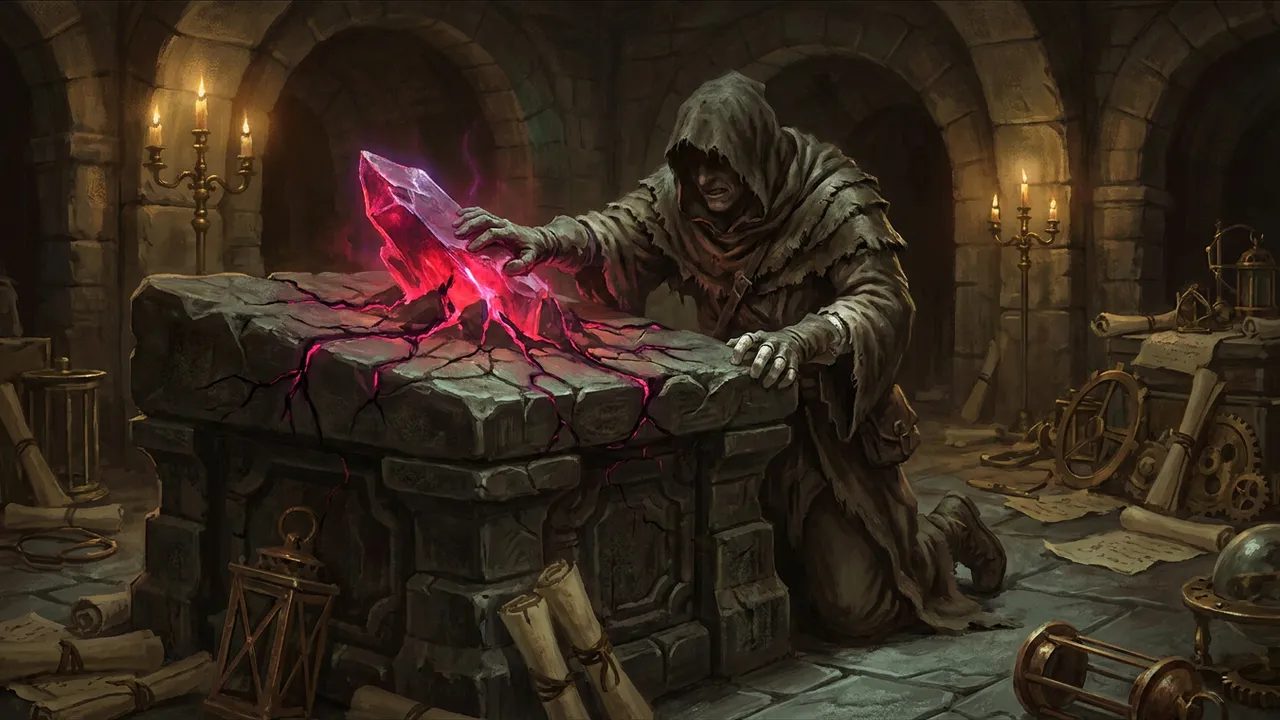
The process of blood magic centered on attuning a crystal to the practitioner's own blood. According to A History of Rislandia, this attunement was painful and dangerous. Once achieved, the crystal bonded more deeply with its user than was possible through conventional means, granting two to three times the normal power output associated with standard crystal use.
However, this amplified bond came at a severe cost. The user became addicted to the practice, requiring regular "feeding" of the crystal with fresh blood to maintain the bond and its benefits. Over time, those who continued the practice became physically and mentally twisted, suffering progressive deterioration that marked them as distinct from ordinary crystal practitioners.
History
Blood magic was condemned as an abomination by the Church of the Great One and officially banned by the Guild Council. Enforcement of the ban was, however, described as lax. According to A History of Rislandia, during the period known as the Long Decay, blood magic was quietly tolerated by both the Pyrean Order and the Shadowkin, suggesting that institutional opposition to the practice weakened considerably during times of broader societal decline.
The combination of official prohibition and selective tolerance meant that blood magic persisted in the margins of society rather than being eradicated outright.
Legacy
Blood magic stood as a cautionary example of the dangers of pushing crystal magic beyond its sanctioned boundaries. The physical and mental corruption suffered by its practitioners, combined with the addictive nature of the blood-crystal bond, ensured that the technique remained associated with desperation, corruption, and moral transgression throughout Rislandian history.