Indigenous Peoples of the Iberanth Peninsula
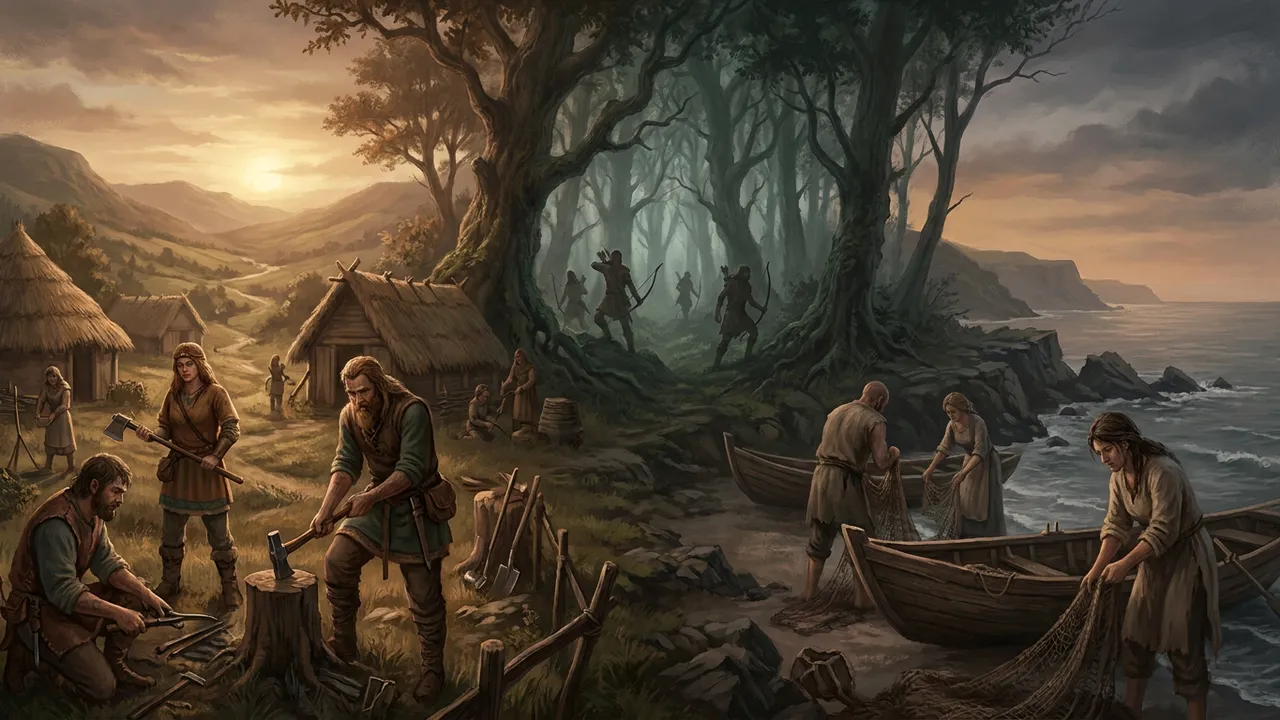
The indigenous peoples of the Iberanth Peninsula comprised three distinct groups who occupied different ecological zones of the region before and during the arrival of the refugees led by Jory Malaky. According to A History of Rislandia, these peoples were not organized into kingdoms and had no unified political structure spanning the peninsula. Their cultures, economies, and relationships with the land differed considerably from one another, and their responses to the refugee settlement varied accordingly.
Overview
According to A History of Rislandia, the three indigenous groups of the Iberanth Peninsula were the Hill Folk of the interior valleys, the Forest Dwellers of the Old Forest, and the Coastal Fishers of the western shore. None of these peoples had formed centralized states or kingdoms. Their first sustained contact with outsiders came with the arrival of the refugee exodus, an encounter that would permanently alter the demographic and cultural character of the peninsula.
Groups
Hill Folk
According to A History of Rislandia, the Hill Folk were small farming communities living in the valleys of the Iberanth Peninsula. They practiced agriculture, maintained villages, and possessed basic crafts. Their tools included bronze and iron implements, indicating a level of material sophistication, though they remained politically decentralized and were not organized into kingdoms.
The Hill Folk's first contact with the refugee settlers occurred near what would become Plainsroad Village. The source records that they were terrified at the arrival of the refugees. Their leader at the time of contact was an elder woman named Mira. Under her guidance, the Hill Folk agreed to assist the refugees in exchange for protection from wolves and sea raiders — a pragmatic arrangement that proved consequential for both peoples.
Over the following ten years, approximately 2,000 indigenous peoples joined the refugee settlement, integrating into the nascent community that would eventually become Rislandia.
The Hill Folk also held strong traditional beliefs about the Old Forest. According to A History of Rislandia, "The indigenous Hill Folk claimed the forest had 'always been cursed,'" a conviction that predated any contact with the settlers. This oral tradition proved relevant during the Were-Rat Purge, when Hill Folk guides who knew the forest paths assisted in navigating the Old Forest — lending their knowledge to an effort that their own lore had long warned against entering unprepared.
Forest Dwellers
According to A History of Rislandia, the Forest Dwellers were hunter-gatherers living within the Old Forest. The source describes them as "hunter-gatherers in the Old Forest" and provides no further detail regarding their political organization, leadership, population, or relationship with the refugee settlers. Their presence in the Old Forest — a place the Hill Folk regarded as cursed — suggests a distinct cultural orientation from their valley-dwelling neighbors, though the historical record as preserved in A History of Rislandia does not elaborate on any interaction between the Forest Dwellers and the other indigenous groups or the incoming settlers.
Coastal Fishers
According to A History of Rislandia, the Coastal Fishers lived in villages along the western coast of the Iberanth Peninsula. The source describes them as occupying "villages along the western coast" and offers no additional information regarding their governance, population, material culture, or contact with the refugee settlers. Their coastal position would have placed them in proximity to the sea raiders from whom the Hill Folk sought protection, though A History of Rislandia does not explicitly connect these two facts.
Legacy
The Hill Folk's integration into the refugee settlement represents the most thoroughly documented instance of indigenous participation in the founding of Rislandia recorded in A History of Rislandia. The agreement brokered by the elder Mira established an early precedent of negotiated coexistence rather than outright conflict. The Hill Folk's traditional knowledge of the Old Forest later proved operationally valuable during the Were-Rat Purge, when their guides assisted settlers in navigating terrain that the settlers themselves had little familiarity with.
The Forest Dwellers and Coastal Fishers, by contrast, leave little trace in the historical record as preserved in A History of Rislandia, and their long-term fates following the establishment of the Malaky Dynasty are not addressed by the source.
Notes
The figure of Mira, the elder woman who led the Hill Folk during first contact, is listed among the minor figures in A History of Rislandia. The sourcebook does not assign dates to the events described on this page beyond their placement within the narrative of Jory Malaky's exodus and the early settlement period.