Religious Tolerance Act
Overview
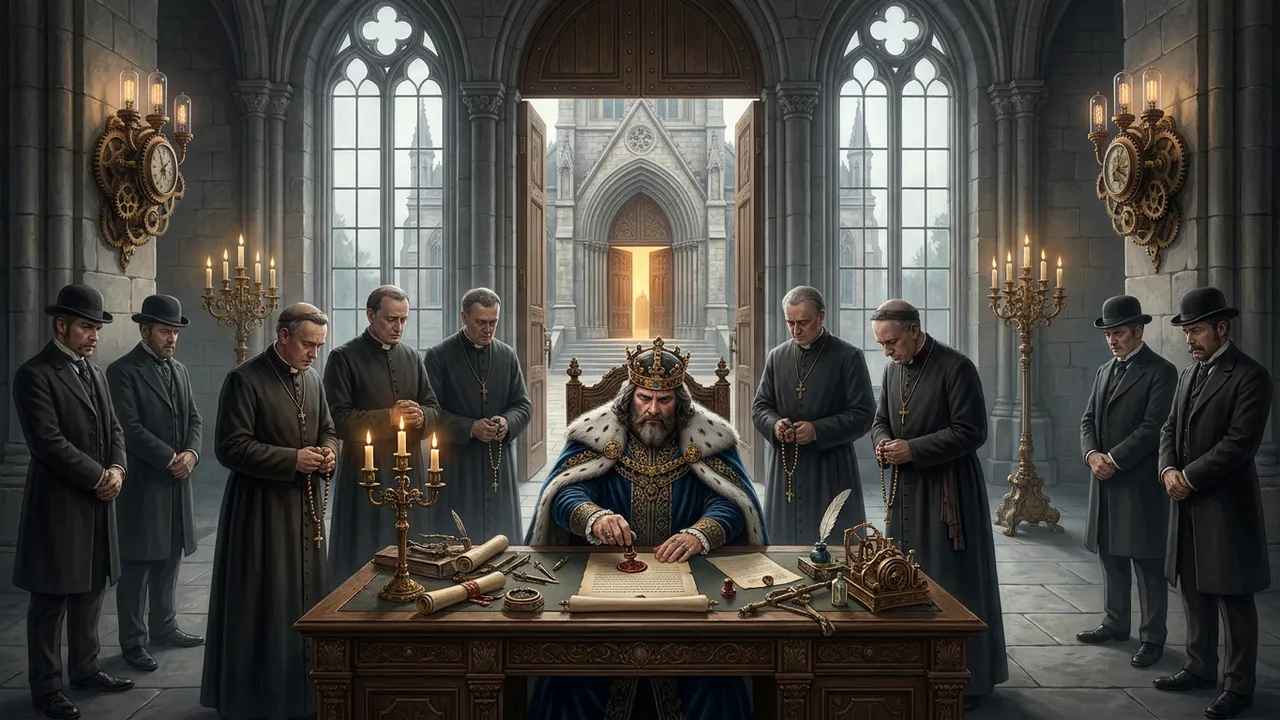
The Religious Tolerance Act was a decree issued by King Malaky VIII in Year 263 of the Rislandian Calendar. According to A History of Rislandia, the act "allowed the Church to operate freely again," ending a period during which the Church of the Great One had been restricted from public life. The legislation reopened temples across Rislandia and restored the legal right to conduct religious education.
History
Prior to Year 263, the Church of the Great One had operated under conditions that prevented it from functioning openly. The circumstances that led to those restrictions are addressed elsewhere in the history of the Malaky Dynasty. King Malaky VIII reversed this policy by issuing the Religious Tolerance Act, formally restoring the Church's legal standing within the kingdom.
According to A History of Rislandia, the act accomplished three concrete measures: it allowed the Church to operate freely again, it reopened temples, and it permitted religious education to resume.
Legacy
Despite the protections granted by the act, the Religious Tolerance Act did not restore the Church to its former position in Rislandian society. According to A History of Rislandia, the Church never regained its former power following the period of restriction, and most Rislandians remained secular in the years that followed. The act thus marked a legal turning point rather than a cultural revival, preserving the Church's right to exist while reflecting a broader shift in Rislandian society away from institutional religion.