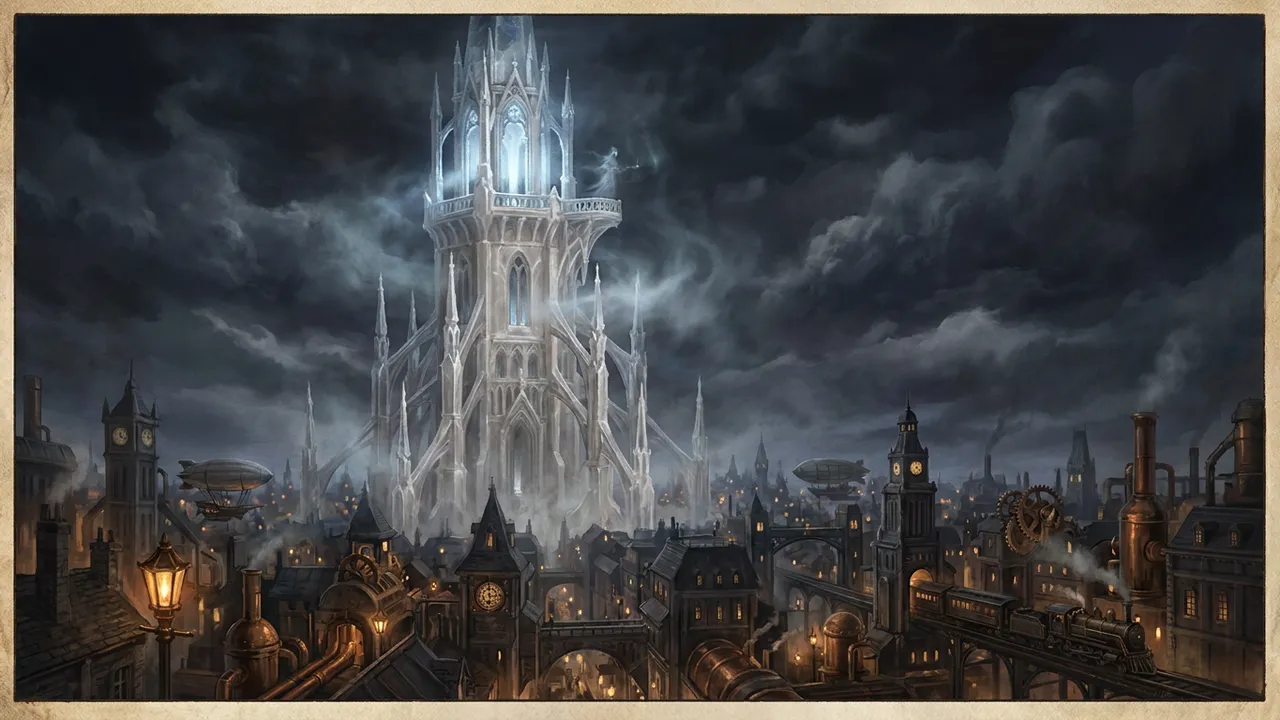
The Weeping Woman (Crystal Spire Legend)
| Type | Legend / Folklore |
| Location | The Crystal Spire |
| Occurrence | Anniversary of the Crystal Spire's discovery (Founding Day) |
| Origin | Unknown; disputed |
| Source | A History of Rislandia |
| Category | Legends and Folklore of Areth |
Overview
The Weeping Woman is one of the enduring legends attached to the Crystal Spire, the ancient tower that stands at the heart of Rislandia. According to A History of Rislandia, a sound resembling weeping — described as "a grief so profound it seems to seep into the very stones" — was said to emanate from the uppermost chambers of the spire. The phenomenon was reported to occur on the anniversary of the tower's discovery, the date commemorated as the founding of Rislandia.
The legend gave rise to several competing interpretations, none of which achieved scholarly consensus. It remained a fixture of Rislandian popular memory and was counted among the mysteries that made the Crystal Spire a subject of reverence and unease in equal measure.
Description
According to A History of Rislandia, the weeping sound originated specifically from the uppermost chambers of the Crystal Spire rather than from its lower levels or exterior. Witnesses and chroniclers described the sound in terms that emphasized its emotional quality, characterising it as grief made audible — a sorrow that seemed to permeate the very fabric of the ancient structure.
The sound was not reported as a constant presence. Accounts consistently placed its occurrence on the single annual date marking the spire's discovery, lending the phenomenon a ritualistic quality that deepened its association with the founding of Rislandia itself.
Theories and Interpretations
According to A History of Rislandia, four principal explanations were advanced over the years to account for the Weeping Woman.
The Grieving Giant
One widely held belief held that the weeping belonged to a Giant — either a wife or daughter of one of the ancient builders — mourning the fall of her civilisation. This interpretation connected the legend directly to the Age of Giants and the broader tradition of Giant lore on Areth. Proponents pointed to the immense scale of the Crystal Spire itself as evidence of Giant construction, arguing that such a monument might naturally retain some echo of its builders' sorrow.
The Human Spirit
A second theory proposed that the source was not a Giant at all but a human woman who had died within the tower during the early years of Rislandian settlement. Under this interpretation, the Weeping Woman was a ghost bound to the place of her death, her grief renewed each year on the anniversary of the founding. This reading situated the legend firmly within the human history of Rislandia rather than the pre-human past.
The Spirit of the Tower
A third and more abstract theory suggested that the Weeping Woman was not a discrete spirit but rather a manifestation of the Crystal Spire itself — the tower mourning the loss of its original builders. This interpretation treated the spire as possessed of some form of consciousness or memory, an idea consistent with broader beliefs about the properties of crystal magic in Rislandian tradition.
The Skeptical Explanation
Not all commentators accepted a supernatural origin. Skeptics, as recorded in A History of Rislandia, argued that the sounds attributed to the Weeping Woman were produced by entirely mundane causes: pipes within the structure and the natural settling of its ancient stonework, which together could generate sounds resembling human crying under the right atmospheric conditions.
Legacy
The legend of the Weeping Woman formed part of the larger body of lore surrounding the Crystal Spire and contributed to the tower's reputation as a place where the ancient past remained present and active. Its annual recurrence on Founding Day ensured that the legend was regularly renewed in public consciousness, intertwining questions of Rislandia's origins with the unresolved mystery of the spire's builders.
The Weeping Woman was catalogued alongside other Crystal Spire legends, including The Shadow, as part of the accumulated folklore that shaped Rislandian attitudes toward their most prominent landmark.