Wyranth Customs & Traditions
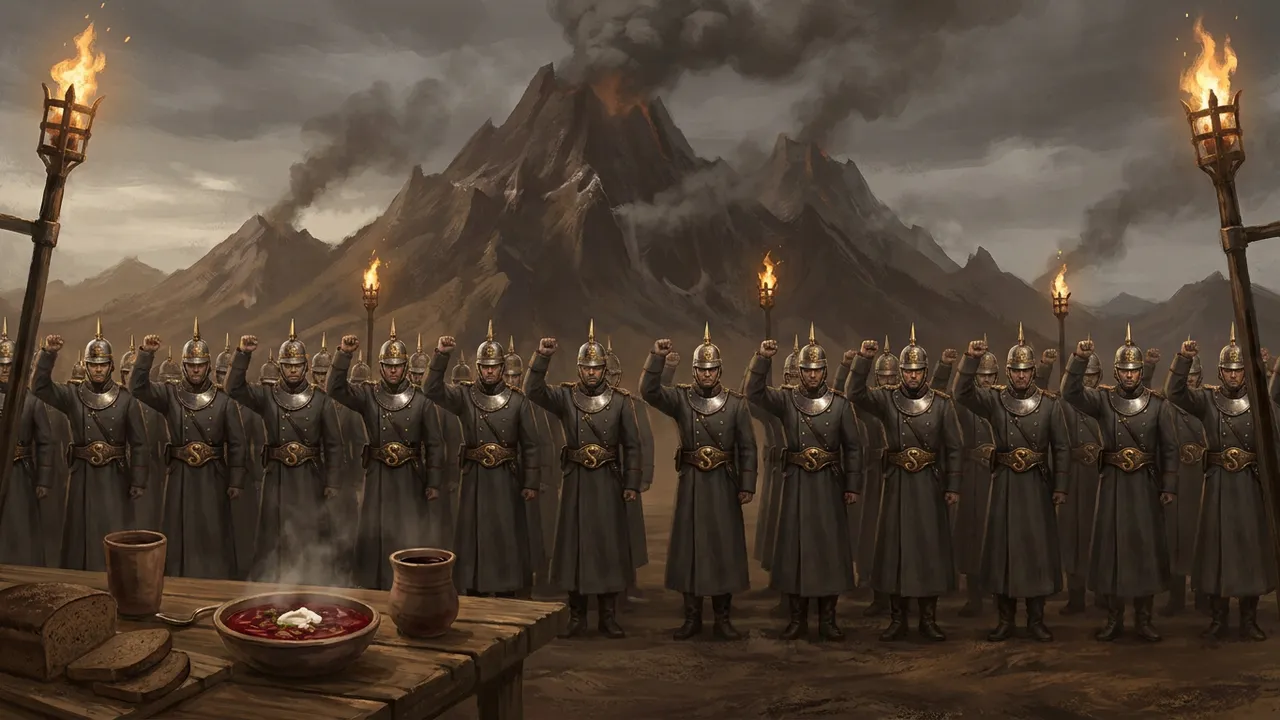
The Wyranth Empire developed a culture shaped by martial discipline and imperial identity. According to A History of Rislandia, its customs fell broadly into two categories: military traditions that bound soldiers to the emperor and to one another, and culinary traditions that defined everyday life for the Wyranth people.
Military Traditions
The Iron Oath
According to A History of Rislandia, the Iron Oath was a foundational military tradition of the Wyranth Imperial Army. Soldiers swore loyalty to the emperor before Devil's Mountain, making the ceremony both a personal pledge and a geographically anchored rite. The sourcebook records the oath's setting in the words: "Soldiers swear loyalty to the emperor before Devil's Mountain." The Iron Oath reinforced the absolute authority of the emperor over his armed forces and tied military service to the imperial institution rather than to any individual commander.
The March
Also documented in A History of Rislandia, The March was a Wyranth military tradition in which soldiers marched in perfect formation as a public display of discipline. The sourcebook describes it as: "Soldiers march in perfect formation, a display of discipline." The March served as both a training exercise and a ceremonial demonstration of the Wyranth Imperial Army's cohesion and readiness, reinforcing the empire's image of martial order.
Common Oaths and Expressions
"By the Iron Throne!"
According to A History of Rislandia, the most common Wyranth oath invoked the Iron Throne, recorded verbatim as: "By the Iron Throne!" This expression reflected the centrality of imperial authority in Wyranth civic and social life, extending the culture of loyalty beyond the military into everyday speech.
Culinary Traditions
Black Bread
According to A History of Rislandia, black bread served as the foundation of every Wyranth meal. Described as "dense, dark rye bread (the foundation of every meal)," it was a staple present at tables across all levels of Wyranth society. Black bread also served a secondary function as the base ingredient for kvass, the empire's common fermented beverage.
Borscht
According to A History of Rislandia, borscht was a common Wyranth dish consisting of "beet soup with cabbage and potatoes, served with sour cream." It represented one of the most recognizable elements of Wyranth cuisine and was likely consumed across both civilian and military contexts given its simple, hearty ingredients.
Pierogi
According to A History of Rislandia, pierogi were a common Wyranth dish described as "dumplings filled with potatoes, cabbage, or meat." The variety of fillings suggests the dish could be adapted to available ingredients, making it a flexible staple of the Wyranth diet.
Goulash
According to A History of Rislandia, goulash was a Wyranth meat stew prepared with paprika and vegetables, with the sourcebook noting it was made "when meat is available." This qualification indicates that meat was not always a reliable resource for ordinary Wyranth people, and goulash was likely considered a more substantial or celebratory meal.
Kvass
According to A History of Rislandia, kvass was a common Wyranth beverage described as "a fermented drink made from black bread." Its derivation from black bread, itself the foundation of every Wyranth meal, underscores how central rye was to Wyranth food culture. Kvass would have been consumed widely given the ubiquity of its primary ingredient.
Legacy
The customs and traditions of the Wyranth Empire reflected a society organized around imperial loyalty and collective endurance. The military rites of the Iron Oath and The March bound the Wyranth Imperial Army to the emperor and to the land itself, while the culinary traditions—centered on black bread, root vegetables, and fermented drink—spoke to a people accustomed to sustaining themselves through hardship. These practices formed a cultural identity distinct from that of neighboring Rislandia, as documented in A History of Rislandia.