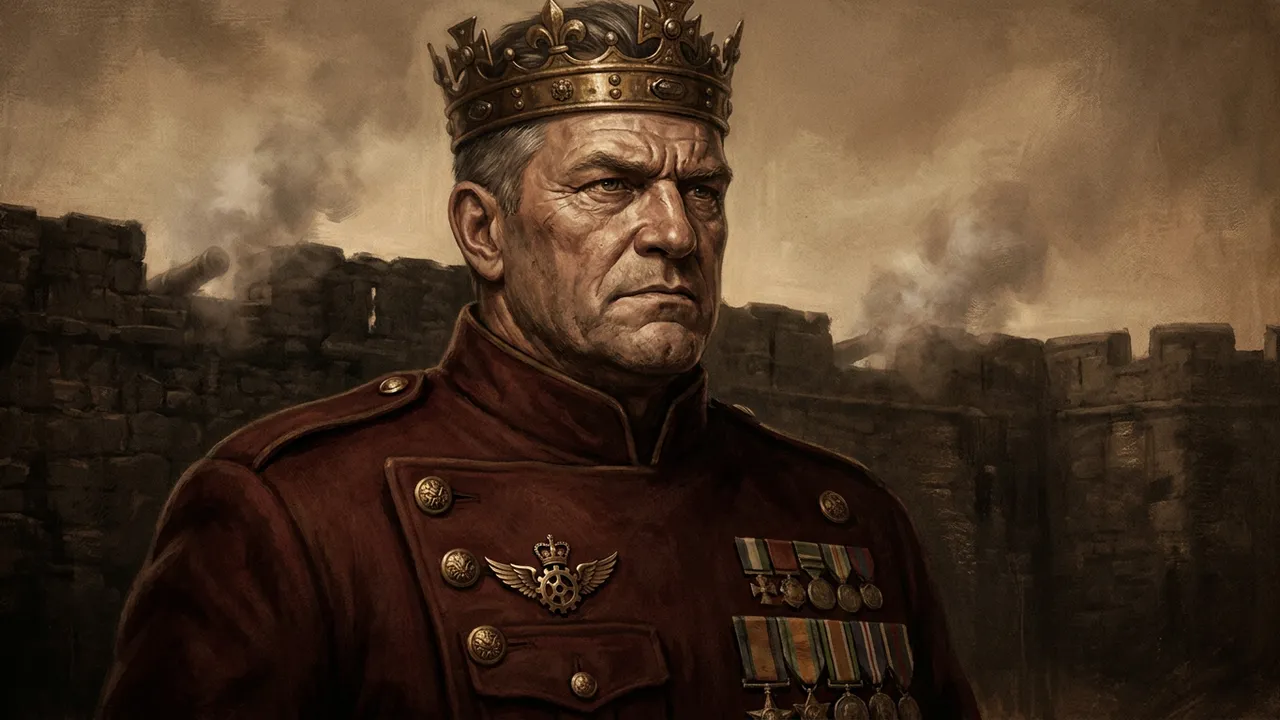
King Malaky XI
Overview
King Malaky XI, epithet "the Warrior," reigned over Rislandia from Year 337 to Year 356, a period of nineteen years defined almost entirely by war, military reform, and the construction of an enduring defensive infrastructure. According to A History of Rislandia, he was brave, aggressive, hot-tempered, and deeply inspiring to the soldiers who served under him. He is counted among the Warrior Kings of the Malaky Dynasty and holds the singular distinction of being the last Rislandian king to die in combat.
Early Reign and the First Wyranth War
Malaky XI was the son of King Malaky X and was crowned during the opening of the First Wyranth War. Rather than delegate command, he immediately took personal charge of the army. According to A History of Rislandia, he led the counteroffensive at Pleasant Pass and personally commanded artillery bombardments during the conflict. His conduct in the field was not without cost: he nearly died in battle on two separate occasions before the war concluded.
The war ended with a treaty in Year 341 (see Treaty of Year 341), though Malaky XI's martial outlook would shape the remainder of his reign.
Military Reforms and Fortification
In the years following the First Wyranth War (Years 342–355), Malaky XI maintained a large standing army rather than demobilizing. According to A History of Rislandia, he oversaw the development of new weapons, including rifled barrels. He built or reinforced every border fort in the kingdom, created a defensive line along the Border River, and made Pleasant Pass impregnable. These works represented one of the most sustained periods of military investment in Rislandian history.
Death
Malaky XI died in battle at the age of 60 in Year 356, during a border skirmish. As A History of Rislandia records: "He was the last Rislandian king to die in combat." He was succeeded by his son, King Malaky XII.
Legacy
Malaky XI's reign left a lasting imprint on Rislandian military doctrine and border security. The fortifications he constructed along the Border River and at Pleasant Pass remained strategically significant for generations. His development of rifled barrels advanced Rislandian weapons technology in ways that outlasted his reign. He is remembered in the historical record as one of the defining Warrior Kings of the Malaky Dynasty, and his death in the field cemented his reputation as a king who led from the front at every stage of his rule.